I am an Assistant Professor at University of Guelph. Prior to joining University of Guelph in 2025, I completed my Postdoc, PhD, and MSc in Computer Science and Electrical Engineering at York University and BSc in AI at University of Toronto.
I am interested in building computer vision systems inspired by human vision and cognition for various applications, with focus on intelligent transportation, assistive driving systems, and autonomous driving. My main goal is to advance human-centered traffic safety by developing human-compliant models and identifying open problems through application of domain knowledge, extensive data analysis, and systematic benchmarking.
Research
Research interests: human-inspired computer vision; visual attention; pedestrian behavior; driver attention; cognitive architectures; evaluation and benchmarking.
Current projects
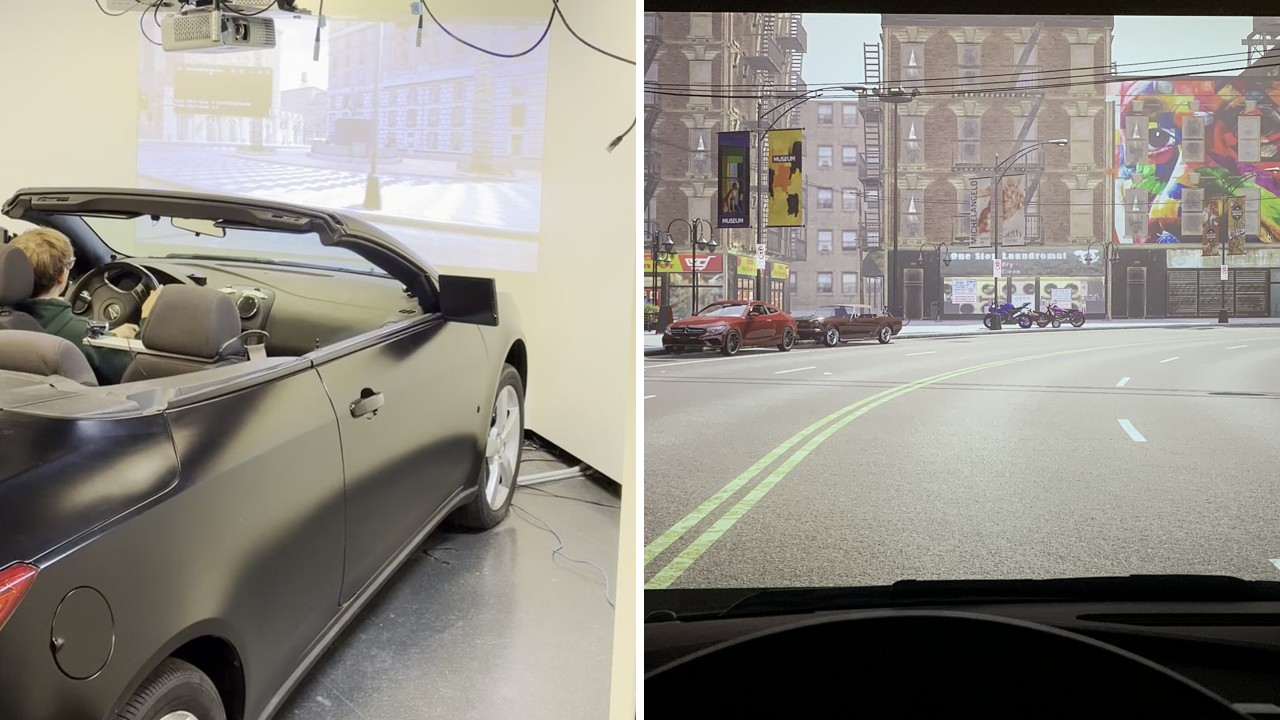
Upgrading the DRiVE Lab driving simulator
We are rebuilding the lab’s driving simulator around CARLA, integrating a Pontiac G6 car cabin, surrounding displays, steering feedback, and a Pupil Labs Neon eye tracker. The goal is a flexible platform for studying driver attention and behavior in traffic scenarios we can control and repeat.
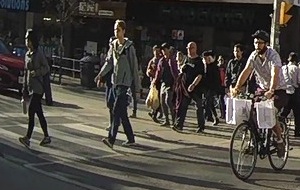
More realistic pedestrians in simulation
We are developing more diverse pedestrian behaviors and decision-making in CARLA to reduce the gap between simulated and real traffic, supporting better training and testing of automated driving systems.
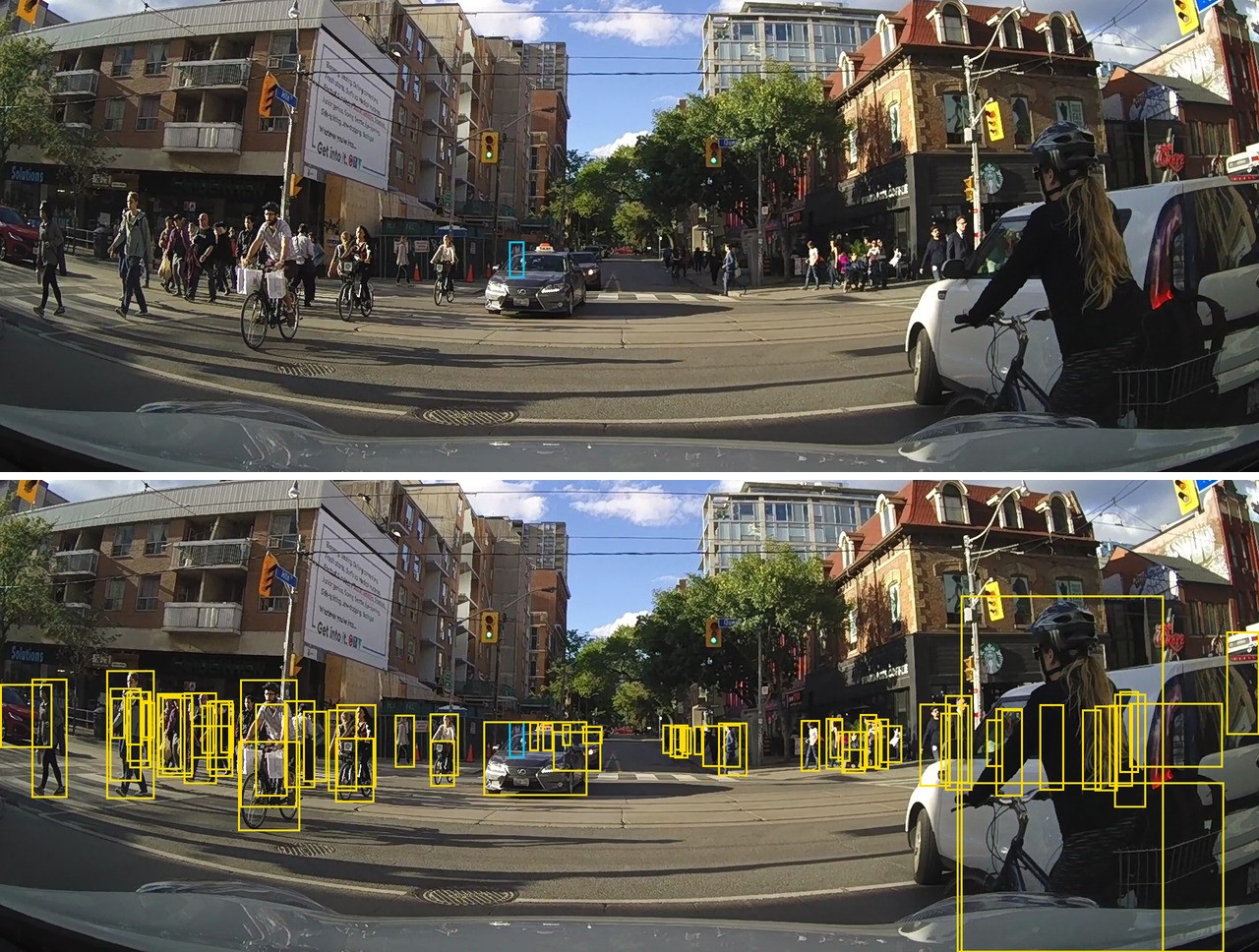
Understanding pedestrian behavior with vision-language models
We compare model predictions with human judgments and develop benchmarks to assess how well these models interpret pedestrian behavior and interactions with vehicles.
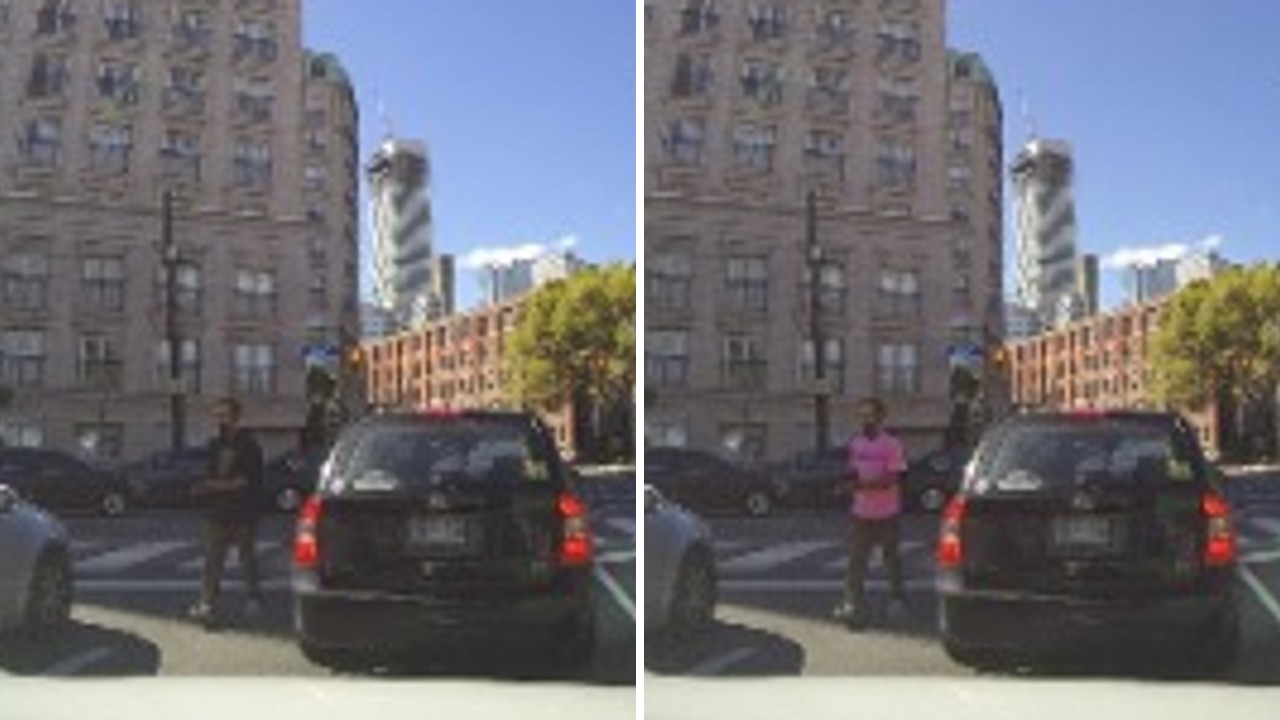
Effects of distractions on vision-language models
We investigate how irrelevant objects in traffic scenes influence model performance, with the goal of understanding and improving their reliability.
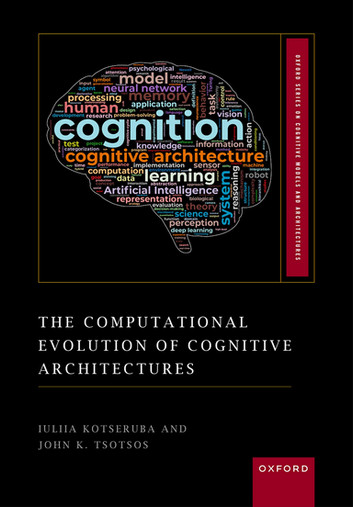
The Computational Evolution of Cognitive Architectures Iuliia Kotseruba and John K. Tsotsos Oxford University Press, 2026
How do we build computational models of the mind? Our new book, The Computational Evolution of Cognitive Architectures, explores this question by tracing the field from early symbolic systems to modern approaches incorporating deep learning. Drawing on more than 3,000 publications covering over 80 architectures, we examine how these systems work, what they can and cannot do, and where the next generation of cognitive architectures might take us.
Disentangling Pictorial Cue Understanding from Language Bias in VLMs via Depth Ordering Task. Y. Liu, I. Kotseruba, and J. K. Tsotsos. ECCV 2026.Paper |
Code/data
SCOUT+: Towards Practical Task-Driven Drivers’ Gaze Prediction. I. Kotseruba and J. K. Tsotsos.
IEEE Intelligent Vehicles Symposium, 2024. (Best student paper award)Paper |
Code/data
PedFormer: Pedestrian Behavior Prediction via Cross-Modal Attention Modulation and Gated Multitask Learning. A. Rasouli and I. Kotseruba. ICRA 2023.Paper
NSERC Discovery Grant (DG), 2026–2031: Developing cognitively-inspired systems for intelligent transportation.
NSERC Research Tools and Instruments Grant (RTI), 2026: DriveLab 2.0: Critical Infrastructure Upgrade for Advancing Interdisciplinary Research in Computer Vision, HCI, and Intelligent Transportation.
If you are interested in my research topics and would like to contribute, there are several pathways for becoming a member of my lab:
As an undergraduate student
CIS*4900/CIS*4910 — individual project course (if you have 7 CIS credits, you are eligible)
Work on a project for 1 or 2 terms.
Expected workload is 10 h/week or more.
Projects usually involve ongoing work in my lab and can be either engineering-focused (e.g. building a piece of software to do something useful) or research-oriented (e.g. exploring a new open-ended problem).
If you are interested, email me with “CIS*4900/4910 interest” in the subject line.
This will ensure that I will see your application. There is a chance that emails may end up in my spam folder because they come from outside of the university.
I will reach out to shortlisted applicants and invite them for interview. I will help successful candidates with further application steps.
Although I do not make admissions decisions, securing a supervisor greatly improves chances of admission.
Apply on the UoGuelph webpage and indicate my name as a potential supervisor in your application.
I currently do not have funding for postdoctoral positions.
If you have external funding or are planning to apply for it, email me with your CV and research plan. If your interests align with the work in my lab, we can discuss further.
External funding options include the Canada Postdoctoral Research Award ($70,000 per year for two years). International applicants must be enrolled in or have completed a doctorate in Canada, or already be conducting postdoctoral research in Canada. Please check the program’s full eligibility requirements before applying.